The Glorious Saga of the Mandavya Bajgain LineageRoyal Heritage, Ancestral History, Service and Leadership
October 25, 2026A Lineage Blessed by Mahadev
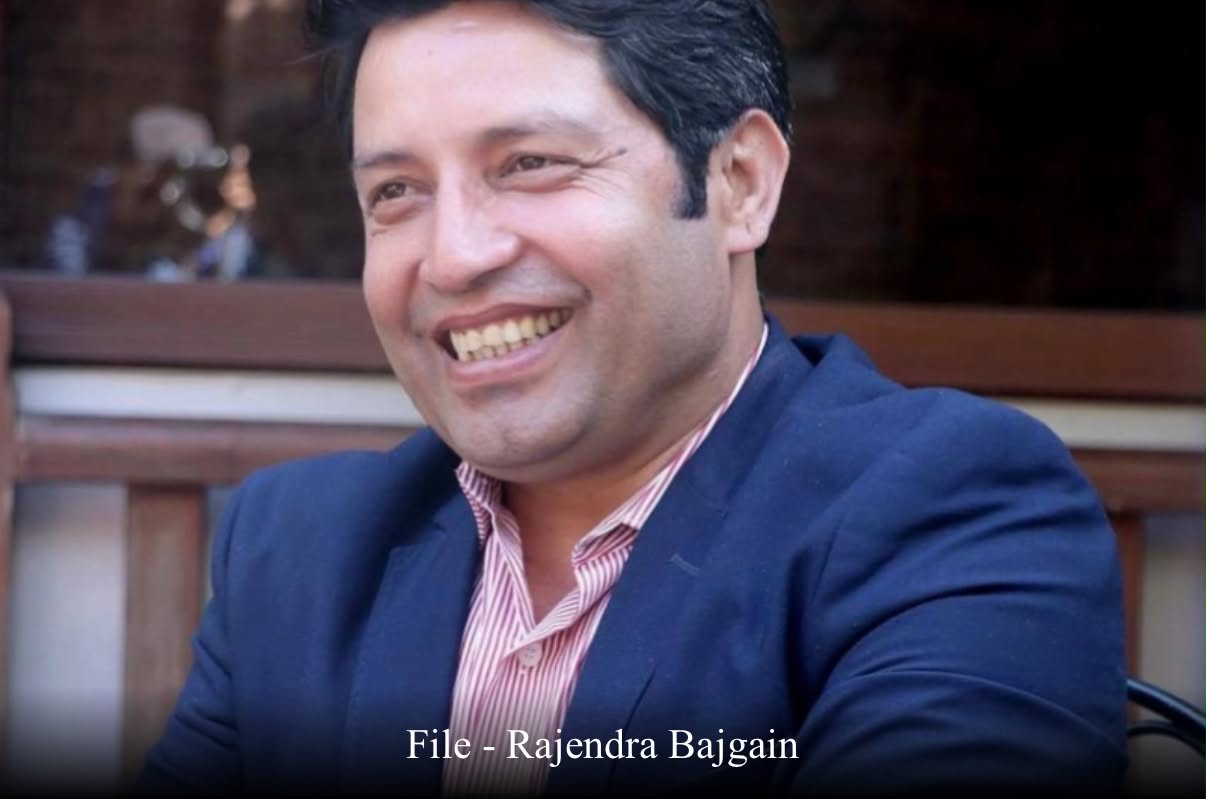
By the grace and blessings of Mahadev (Lord Shiva), the construction of the Jalpa Devi Temple was completed. Under the leadership of Rajendra Bajgain, a descendant of the Bajgain lineage connected to the ancestral traditions of Masta and Bandali, the writing and documentation of the family genealogy was also completed.
Ancestral Origins
The Bajgain family traces its lineage to the Bhatta dynasty. According to family legend, the founding ancestors of the Bajgain lineage were descendants of Jajadev Bhatta, and are believed to have been connected to the Shah dynasty of Jumla.
According to this lineage tradition, the Bajgains were brought to Achham and settled in Banjhgaun. Family history records that they were granted a royal throne and sceptre there, and that the Bajgain lineage became linked to the local ruling authority of that region.
The family has also carried the title of “Adhikari.” In family tradition, this title is understood as a mark of recognised authority, responsibility and the duty of governance.
For generations, the Bajgain family has kept alive its royal standing, ancestral identity and sense of duty towards the people. Like many ancient lineages, the family continues to research and document its chronology, genealogy and historical records.
Mandavya Bajgain Foundation
The Mandavya Bajgain Foundation was established to preserve and promote the family’s ancestral heritage, historical identity and cultural legacy.
The Foundation was founded under the leadership of Rajendra Bajgain, in collaboration with Bishnu Bajgain and Shashi Bajgain. It was made possible by the contributions and support of Min, Bishwa, Binod, Kishwar, Surya, Nawaraj, Hemant and Geeta Bajgain, and of Rajendra Bajgain’s late father, Thir Pr. Bajgain.
From the outset, a distinguished advisory group committed to the Foundation’s mission has included General Rookmangud Katawal, Chandra Bhandari, Pradeep Gyawali and Binod Gyawali.
Abhishek Bajgain, Abhideep Bajgain and members of the family’s younger generation carry the responsibility of passing this historic legacy on to future generations.
Rajendra Bajgain: From Ancestral Heritage to Public Service
Rajendra Bajgain is a former Member of the House of Representatives from Gorkha-1, an entrepreneur and a humanitarian. His public life is guided by one core belief: the true value of leadership is measured not by the office one holds, but by the lives one is able to save.
The Campaign to Save Two Lives
His most distinctive humanitarian campaign is the rescue of pregnant women and new mothers whose lives are in danger in Nepal’s remote Himalayan villages.
In settlements without roads, hospitals or skilled maternity care, a complicated childbirth can become fatal within hours. In such situations, Rajendra Bajgain has led emergency helicopter rescues, initiating and carrying out operations that bring mothers at risk to safety and essential medical care.
His conviction is simple yet profoundly powerful: saving a mother’s life means saving two lives, the mother’s and her baby’s.
What began as direct rescue efforts has also strengthened a policy vision: emergency maternal rescue should not depend on chance or charity, but must be established as a responsibility of the state.
Guardian of the Himalaya and Those Who Labour in It
Rajendra Bajgain advanced the concept of a Porter Protection and Trekker Information Management System. Its purpose was to strengthen the safety, record-keeping and accountability of porters and tourists on trekking routes.
The initiative aimed to prioritise the safety, dignity and rights of porters, the backbone of Nepal’s mountain tourism. It also aimed to better organise the identification, record management and safety of trekkers visiting Nepal.
He is a firm advocate for protecting the Himalaya’s natural environment, its cultural heritage and its communities.
Long-Term Safety and Preparedness for the Himalaya
Rather than limiting himself to individual rescues, Rajendra Bajgain has consistently stressed the need to build systems that can save lives on a large scale.
He supports strengthening the scientific monitoring of glaciers, the assessment of climate risk and early-warning systems. To this end, he has put forward two proposals. One is to expand the regional role of the International Centre for Integrated Mountain Development (ICIMOD). The other is to establish an International Himalayan Glacier Center for glacier monitoring, climate research, risk assessment and regional coordination.
He has also proposed collaboration with the world’s technology leaders. The aim is to move Nepal beyond merely reacting after disasters strike and make it resilient to disasters in the long term.
This vision includes real-time satellite data to support rescue operations and artificial intelligence (AI) monitoring of glaciers and glacial lakes. It also includes strategic emergency centres across the Himalayan region, equipped with helipads, healthcare and communication facilities.
In his view, such infrastructure should be developed in partnership with the Government of Nepal, the Nepali Army and national institutions.
A Bridge Between Nepal and the World
Rajendra Bajgain’s work rests on relationships that reach across Nepal, the United Kingdom, the United States, the Gulf region and the wider international community.
He speaks Nepali, English and Arabic, which allows him to build connections easily across cultures, communities and international settings.
He has played a role in creating opportunities for contact and collaboration between Nepal’s leadership and government leaders, technologists, academics and influential figures in industry around the world. His central aim is to harness international investment, knowledge, technology and partnerships for Nepal’s development.
Conscience and the People’s Lives Above Office
In September 2025, after young people lost their lives during a nationwide movement, Rajendra Bajgain resigned from his seat in the House of Representatives.
The decision was presented as a step that placed his conscience and moral values above remaining in office. Though it came at great personal cost, it revealed a principle that has guided his public life: no office created to protect the lives and welfare of the people can be greater than the lives of the people themselves.
Entrepreneurship with Purpose
As an entrepreneur, Rajendra Bajgain has worked across luxury hospitality, adventure tourism, energy trading and strategic advisory services.
His best-known ventures include Gurkha Encounters, which offers exclusive luxury trekking and adventure tourism in Nepal’s Himalayan region. They also include the Varnabas Museum Hotel in Kathmandu, built on a heritage concept that celebrates Himalayan culture and tradition.
His enterprises aim to present Nepal’s cultural and natural heritage to the world while creating jobs, investment and economic opportunity at home.
Economic Philosophy and National Vision
Rajendra Bajgain regards capitalism, entrepreneurship and private-sector-led economic development as an effective foundation for national prosperity.
He is a critic of socialism and similar ideologies. In his view, they discourage entrepreneurship, weaken individual initiative and hold back economic growth.
His economic vision for Nepal rests on productive investment, job creation, modern infrastructure, innovation and the responsible mobilisation of private capital.
His goal is for every Nepali, from the mountains to the cities, to have the opportunity to take part in the nation’s economic progress and share in the rewards of prosperity.
A Living Legacy
For Rajendra Bajgain, ancestral heritage is not confined to the past. It is a responsibility to serve society today and build a better future.
The legacy of the Bajgain lineage brings together ancestral identity, cultural preservation, public leadership, humanitarian service and an unwavering belief in entrepreneurship as the engine of national development.
From the royal throne of Achham to rescue helicopters in the Himalaya, the saga of the Bajgain lineage carries one central message: true authority is not only the privilege to govern, but also the responsibility to protect the lives of others.